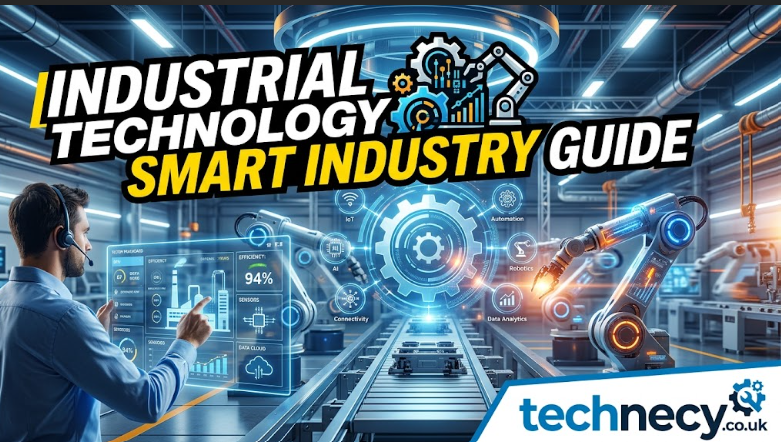
Industrial technology has changed the way companies design, build, and manage products. Factories that once depended mainly on manual labor now use connected machines, automated systems, and digital tools to improve accuracy and speed. These changes have helped businesses produce higher-quality goods while reducing waste and improving workplace safety. At its core, industrial technology focuses on using technical knowledge to solve production challenges. It combines engineering, computers, machinery, and management systems to create better ways of working. From automated manufacturing plants to intelligent monitoring systems, industrial technology has become an important part of modern industry.
What Is Industrial Technology?
Industrial technology is the practical use of technical systems and engineering methods to improve industrial operations. It includes the machines, software, processes, and tools used to design products, manage production, and maintain equipment. The field covers many areas, including manufacturing systems, automation, robotics, quality control, and industrial data management. Unlike traditional production methods, modern industrial technology relies on digital information to help companies make faster and more accurate decisions. A simple example is a factory that uses sensors to track machine performance. Instead of waiting for equipment to fail, workers can identify possible problems early and schedule maintenance before production is affected.
Why Industrial Technology Has Become Important
Industries today face increasing pressure to produce better products at competitive prices. Customers expect faster delivery, improved quality, and more customized options, while companies need to control costs and use resources efficiently. Industrial technology helps businesses meet these demands by improving how work is planned and completed. Automated systems can handle repetitive tasks, while digital tools provide information that helps managers improve operations. The growth of connected technology has also changed expectations. Companies are moving from isolated machines toward integrated systems where equipment, software, and employees work together.
How Industrial Technology Works
Modern industrial technology works through a combination of physical equipment and digital systems. Machines perform production tasks, sensors collect information, and software analyzes data to improve performance. For example, a production line may use sensors to measure temperature, pressure, or machine speed. The collected information can help operators identify unusual patterns and prevent production problems. Many industries now use smart manufacturing systems that allow factories to monitor operations in real time. These systems help companies understand what is happening on the factory floor and make improvements based on actual data.
Major Technologies Used in Industrial Operations
Automation and Machine Control
Automation allows machines to complete tasks with limited human involvement. It is commonly used for assembly, packaging, inspection, and material handling. Factories use automated systems because they can perform repetitive tasks consistently. This improves production accuracy and allows workers to focus on technical and problem-solving activities.
Robotics
Robots are widely used in industries where precision and repeatability are important. Automotive manufacturers, electronics companies, and logistics businesses use robots for tasks such as assembly, welding, sorting, and packaging. Modern industrial robots are becoming more adaptable. Advances in sensors and software allow them to work in changing environments and cooperate with human workers.
Industrial Internet of Things (IIoT)
The Industrial Internet of Things connects machines, sensors, and software platforms. It allows companies to collect operational information and use it to improve performance. For example, a manufacturing company can track equipment usage, energy consumption, and production speed through connected systems. This information helps identify areas where improvements can be made.
Artificial Intelligence and Data Analysis
Artificial intelligence is helping industries process large amounts of information. AI systems can analyze production data, identify patterns, and support better decision-making. Manufacturers use AI for tasks such as detecting product defects, predicting equipment issues, and improving production schedules. However, AI works best when combined with human knowledge. Experienced technicians and engineers remain essential for managing complex industrial systems.
Industries That Depend on Industrial Technology
Industrial technology is used across many sectors. Manufacturing companies use it to improve production processes and maintain product quality. Automotive companies rely on robotics and automation to build vehicles efficiently. Aerospace manufacturers use advanced systems to create precise components that meet strict safety requirements. The energy sector uses industrial technology to monitor equipment and improve resource management. Healthcare companies use advanced production systems to manufacture medical devices and laboratory equipment. Even industries such as agriculture and transportation are adopting industrial technologies to improve efficiency and reduce operational challenges.
Benefits of Industrial Technology
One major benefit of industrial technology is improved productivity. Automated equipment can complete tasks faster and with consistent results. Quality improvement is another advantage. Digital monitoring systems help companies identify problems earlier and reduce manufacturing errors. Industrial technology also improves safety. Machines can perform dangerous tasks in environments where human workers may face risks. Another important benefit is better resource management. Companies can monitor energy use, materials, and equipment performance to reduce unnecessary waste.
Challenges Companies Face
Adopting industrial technology requires careful planning. Advanced equipment and software can involve high costs, especially for smaller businesses. Another challenge is employee training. Workers need new technical skills to operate and maintain modern systems effectively. Cybersecurity has also become a major concern. As industrial systems become more connected, companies must protect their networks from digital threats. There is also the challenge of updating older equipment. Many businesses operate with machines that were not designed for modern digital systems, making integration more complicated.
The Future of Industrial Technology
The future of industrial technology will continue moving toward smarter and more connected operations. Companies are expected to increase their use of automation, artificial intelligence, and data-driven decision-making. Sustainability will also influence future developments. Industries are looking for ways to reduce energy consumption, minimize waste, and create more environmentally responsible production methods. The goal is not simply to replace human work with machines. Instead, successful industrial systems will combine technology with human skills to create safer, more efficient, and more flexible workplaces.
Conclusion
Industrial technology has become a key part of modern industry by connecting machines, digital systems, and human expertise. It allows companies to improve production while solving challenges related to efficiency, quality, and safety. As technology continues to develop, industries will rely more on connected systems, automation, and intelligent tools. Businesses that adopt these solutions thoughtfully will be better prepared for future changes. The real value of industrial technology comes from using innovation to support better decisions, stronger operations, and more sustainable industrial growth.