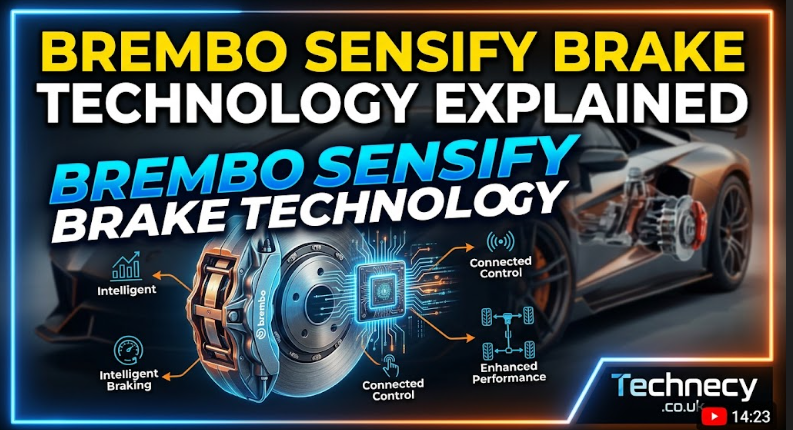
For more than a century, braking technology has focused on improving stopping power, reliability, and driver control. Brembo Sensify takes a different approach by turning the brake system into an intelligent platform that uses software, sensors, and electronic controls to make braking decisions. The goal is not simply to stop a vehicle faster but to create a system that understands driving conditions and responds more accurately. As vehicles become more electric, connected, and automated, traditional mechanical systems are being redesigned for a digital future. Brembo Sensify is one example of this shift, combining advanced electronics with Brembo’s experience in high-performance braking systems. The technology is designed to support modern vehicles that require faster communication between different systems.
What Is Brembo Sensify Brake Technology?
Brembo Sensify is an advanced brake-by-wire system that replaces some traditional hydraulic functions with electronic control. Instead of relying only on brake fluid pressure, the system uses sensors and software to manage how braking force is delivered. In a conventional brake setup, pressing the pedal creates hydraulic pressure that activates the brakes at the wheels. Sensify changes this process by allowing electronic systems to analyze information and control braking more precisely. The technology combines several elements, including brake hardware, electronic actuators, control units, and software algorithms. Together, these components create a braking system that can react to changing conditions rather than following a fixed mechanical process.
How Does Brembo Sensify Work?
Sensify begins by collecting information from the vehicle. Sensors monitor factors such as wheel speed, vehicle movement, driver input, and available tire grip. The system then processes this information to determine the most suitable braking response. A major difference is that braking can be managed individually at each wheel. Instead of applying a similar braking action across the vehicle, Sensify can adjust the force delivered to different wheels depending on the situation. For example, a vehicle traveling on a road with uneven traction may need different braking force between the left and right sides. The system can make those adjustments automatically to help maintain stability and control. This approach gives engineers more control over how a vehicle behaves during emergency braking, cornering, and changing road conditions.
Why Independent Wheel Braking Matters
Every tire does not always have the same level of grip. Weather, road surfaces, tire condition, and vehicle weight can affect how much traction each wheel has. Traditional braking systems already use technologies such as ABS and electronic stability control to manage these challenges. Sensify builds on that idea by giving the braking system more detailed control over each wheel. Independent wheel management can help create smoother braking responses and improve vehicle balance. This becomes especially important for electric vehicles, which often have different weight distributions because of their battery packs.
Why Electric Vehicles Need Smarter Brakes
Electric vehicles have introduced new challenges for braking systems. Many EVs use regenerative braking, where electric motors slow the vehicle while recovering energy for the battery. Managing the transition between regenerative braking and traditional friction braking requires accurate control. A smarter braking system can help create a more natural driving experience while maintaining safety. Sensify’s software-based design also matches the direction of modern EV development. Electric vehicles increasingly depend on digital systems that communicate with each other, and braking is becoming part of that connected network.
Benefits of Brembo Sensify Technology
Improved Braking Precision
The biggest advantage of Sensify is the ability to make detailed adjustments during braking. By controlling individual wheels, the system can respond more effectively to different driving situations. This can help improve vehicle stability and provide more predictable braking behavior, especially when road conditions are not consistent.
Better Integration With Safety Systems
Modern vehicles use multiple technologies to improve safety, including cameras, radar, and driver assistance features. A digital braking system can communicate more easily with these technologies. For future vehicles with higher levels of automation, brakes need to respond quickly to decisions made by onboard computers. Sensify is designed with this requirement in mind.
Simplified Mechanical Design
Sensify’s fluid-free approach reduces dependence on traditional hydraulic components. Removing some mechanical connections can give vehicle manufacturers more flexibility when designing future platforms. However, electronic systems also require careful engineering because braking remains one of the most safety-critical functions in any vehicle.
Challenges of Brake-by-Wire Technology
Although brake-by-wire systems offer new possibilities, they also create challenges. Drivers and manufacturers expect braking systems to operate reliably in every situation, from normal driving to emergency conditions. Software reliability is a major consideration. Electronic braking systems need strong safety features, backup solutions, and extensive testing before they can become widely adopted. Cost is another factor. Advanced sensors, electronics, and software development can make these systems more expensive than traditional brake setups. Manufacturers must balance innovation with affordability.
How Sensify Could Shape Future Vehicles
The automotive industry is moving toward software-defined vehicles, where many functions are controlled digitally rather than mechanically. Braking is becoming part of this transition. Future vehicles may need braking systems that communicate with autonomous driving software, navigation systems, and other vehicle controls. Technologies like Sensify are designed to support this connected approach. The move toward intelligent braking does not mean traditional brakes will disappear immediately. Hydraulic systems have a long history of reliability, and many vehicles will continue using them. However, advanced systems may become more common as electric and autonomous vehicles grow.
Common Misunderstandings About Brembo Sensify
One common misunderstanding is that Sensify is simply a faster brake system. Its purpose is not only to improve stopping distance but to improve how the entire braking process is managed. Another misconception is that electronic braking removes driver control. In reality, the system is designed to improve the vehicle’s response while still following driver input. Sensify also does not replace every existing safety system. Instead, it works as part of a broader vehicle technology ecosystem.
Conclusion
Brembo Sensify shows how vehicle technology is moving from purely mechanical systems toward intelligent digital solutions. By combining software with braking hardware, it creates a system that can make more detailed decisions based on real-time conditions. The technology is especially relevant as electric vehicles and automated driving continue to develop. Future cars will require components that can communicate, adapt, and work together. While traditional brakes will remain important for years, intelligent braking systems like Sensify provide a glimpse into how vehicles may become safer and more responsive in the future.