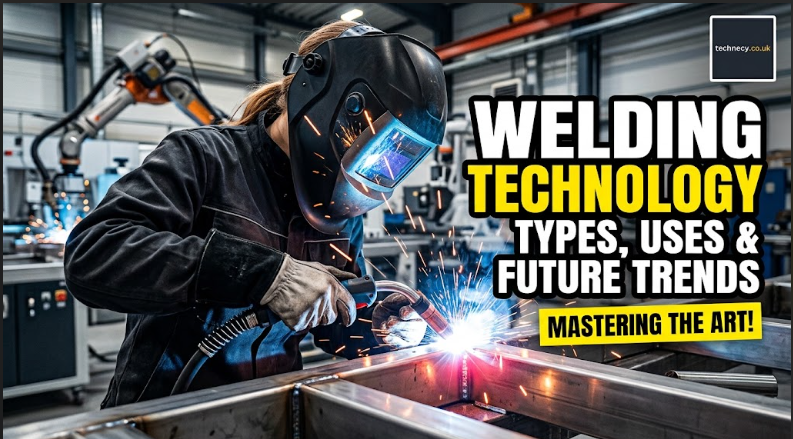
Welding technology has quietly shaped the modern world. The cars on highways, steel structures in cities, aircraft components, pipelines, and industrial machines all depend on reliable welding processes. What was once a manual trade performed mainly with basic equipment has become a highly developed field combining engineering, automation, digital controls, and advanced materials. People often search for welding technology to understand how different welding methods work, which process is suitable for a particular project, and how new developments are affecting industries. Modern welding is not only about joining two pieces of metal; it is about creating strong, accurate, and dependable connections that meet strict safety requirements.
What Is Welding Technology?
Welding technology is the collection of methods, tools, and techniques used to permanently join materials, especially metals. The process usually involves applying heat, pressure, or both to create a bond between separate pieces. The basic idea behind welding has remained the same for decades: bring materials together and create a connection strong enough to perform under real-world conditions. However, the equipment and control systems used today are far more advanced than traditional welding setups. Modern welding systems allow manufacturers to control factors such as temperature, speed, energy input, and material behavior. These improvements help produce stronger joints while reducing defects and production problems.
How the Welding Process Works
A welding process begins by preparing the materials and selecting the correct method for the job. Different metals respond differently to heat, so welders must consider material type, thickness, joint design, and working conditions. During welding, energy is applied to the joining area. In many processes, the metal melts and forms a weld pool. As the material cools, it creates a solid connection between the pieces. The quality of a weld depends on proper control. Excessive heat can weaken materials or cause distortion, while insufficient heat may create weak joints. Professional welders and automated systems carefully manage these factors to achieve reliable results.
Common Types of Welding Technology
MIG Welding for General Manufacturing
MIG welding, also known as Gas Metal Arc Welding, is one of the most widely used welding methods. It uses a continuously supplied wire electrode along with shielding gas to protect the weld area. Many industries prefer MIG welding because it offers a good balance between speed, cost, and ease of operation. It is commonly used in vehicle manufacturing, metal fabrication, and industrial production. The method works well for many common metals, including steel and aluminum. However, achieving high-quality results still requires proper machine settings and operator experience.
TIG Welding for Precision Applications
TIG welding is known for producing clean and precise welds. It uses a tungsten electrode and gives the operator greater control over heat and welding speed.
This method is often chosen for projects where appearance and accuracy matter, such as aerospace components, stainless steel equipment, and specialized fabrication work.
TIG welding usually requires more skill because the process is slower and demands careful control. The advantage is the ability to create detailed and high-quality joints.
Stick Welding for Tough Environments
Stick welding remains an important method, especially in construction and repair work. It uses a coated electrode that creates an electric arc and protects the weld during the process. One reason stick welding continues to be popular is its ability to work in outdoor conditions. It does not require complex gas systems and can handle thicker materials. The process may not match the speed of automated methods, but it remains practical for maintenance, field repairs, and heavy equipment work.
Laser Welding for Advanced Production
Laser welding represents a newer generation of welding technology. Instead of using a traditional arc, it uses a focused laser beam to generate heat and create precise joints. Manufacturers use laser welding when accuracy, speed, and minimal material damage are important. The technology is especially useful in industries producing electronics, automotive components, and precision parts. The main limitation is cost. Laser welding equipment requires significant investment, making it more common in specialized industrial environments.
The Growth of Robotic Welding
Automation has changed the way many factories approach welding. Robotic welding systems can perform repeated tasks with consistent movement and accuracy, making them valuable in high-volume manufacturing. Automotive factories are among the biggest users of robotic welding because vehicles require thousands of similar welds during production. Robots can complete these tasks quickly while maintaining consistent quality. However, robots do not remove the need for skilled professionals. Human workers are still needed to design welding processes, program machines, inspect results, and handle complex situations.
Applications of Welding Technology
Automotive Manufacturing
The automotive industry depends heavily on welding technology. Vehicle frames, body panels, exhaust systems, and battery structures require strong and reliable joints. Modern production lines combine robotic welding with quality monitoring systems to improve efficiency and maintain manufacturing standards.
Construction and Infrastructure
Buildings, bridges, and industrial structures rely on welded steel connections. Welding allows engineers to create large structures that can withstand heavy loads and demanding conditions. Construction welding requires careful planning because mistakes can affect structural safety.
Aerospace and Aviation
Aircraft manufacturing requires extremely precise welding processes because components must meet strict performance and safety requirements. Lightweight materials and complex designs have increased the need for advanced welding methods capable of producing accurate connections without damaging sensitive components.
Advantages of Modern Welding Technology
Modern welding methods provide several benefits for industries and manufacturers. Better equipment allows companies to create stronger products while improving production efficiency.
Key advantages include:
- Improved accuracy
- Faster manufacturing processes
- Stronger material connections
- Reduced production waste
- Better workplace safety
- Greater automation possibilities
Despite these benefits, welding technology also has challenges. Equipment costs, training requirements, maintenance needs, and material limitations must all be considered before selecting a welding method.
Future Developments in Welding Technology
The future of welding is moving toward smarter and more automated systems. Manufacturers are exploring artificial intelligence, advanced sensors, and digital monitoring tools to improve weld quality. Smart welding equipment can collect information during production and help identify problems before they affect the final product. This approach allows manufacturers to reduce errors and improve consistency. Another important development is the combination of human expertise with automation. Future welding environments will likely involve skilled workers managing advanced systems rather than being completely replaced by machines.
Conclusion
Welding technology has developed from a traditional industrial skill into an advanced engineering process that supports modern manufacturing. Different welding methods serve different purposes, from everyday fabrication to highly precise aerospace production. The most effective welding solution is not always the newest one. The right choice depends on the materials, project requirements, and desired results. As industries continue to demand stronger products and more efficient production, welding technology will remain an essential part of engineering and manufacturing for years to come.