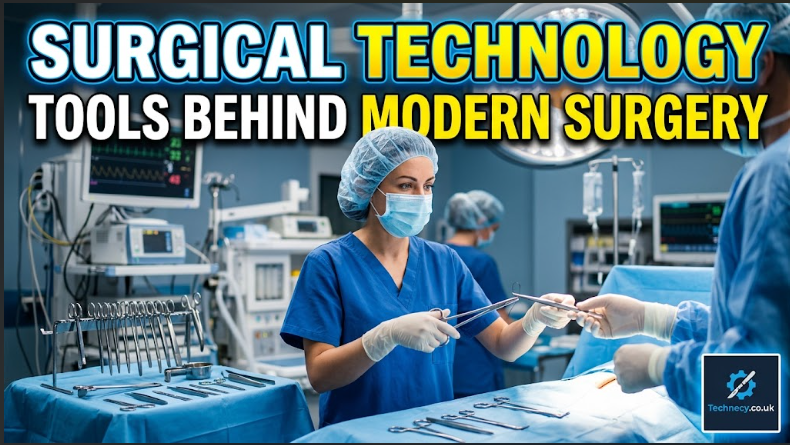
A successful surgery depends on much more than a surgeon’s skill. Behind every procedure is a carefully coordinated team, advanced equipment, and a system designed to protect patients and improve results. Surgical technology brings together medical knowledge, specialized instruments, and digital advancements that help healthcare professionals perform operations safely and efficiently. The field has moved far beyond basic surgical tools. Today’s operating rooms may include robotic systems, advanced cameras, computer-assisted equipment, and digital monitoring solutions. These developments are changing how doctors approach complex procedures while creating new opportunities for healthcare professionals who support surgical care. Understanding surgical technology helps patients, students, and healthcare professionals see how modern operations are planned, performed, and improved over time.
What Is Surgical Technology?
Surgical technology is the practice of using specialized equipment, techniques, and procedures to support surgical care. It includes both the medical tools used during operations and the trained professionals who prepare and manage them. A major part of this field involves surgical technologists. These professionals work alongside surgeons and nurses to ensure the operating room is ready before a procedure begins. They organize instruments, maintain sterile conditions, and help the surgical team access the equipment needed during an operation. Although surgeons are responsible for performing procedures, surgical technologists provide the technical support that allows those procedures to happen smoothly.
How Surgical Technology Supports the Operating Room
An operating room requires careful preparation because every detail can affect patient safety. Surgical technologists begin their work before the patient arrives by checking equipment, arranging instruments, and preparing supplies according to the procedure. During surgery, they remain focused on maintaining a sterile environment and providing the right instruments at the right time. This requires a strong understanding of surgical steps because many procedures move quickly and demand precise coordination. After the operation, surgical technology continues to matter. Instruments must be counted, cleaned, and prepared correctly so they can be safely used again.
The Shift Toward Minimally Invasive Procedures
One of the biggest changes in modern surgery has been the growth of minimally invasive techniques. Traditional surgery often required larger openings to access the treatment area, while newer methods use smaller incisions and specialized instruments. Laparoscopic surgery is one example of this approach. Surgeons use a small camera and narrow instruments to perform procedures while viewing the internal area on a screen. For suitable patients, minimally invasive methods may lead to benefits such as reduced discomfort, smaller scars, and faster recovery. However, these techniques also require advanced training because surgeons must work with different equipment and visual information compared with traditional surgery.
Robotic Systems in Modern Surgery
Robotic-assisted surgery has become one of the most visible developments in surgical technology. These systems give surgeons improved control over specialized instruments while providing detailed views of the surgical area. A robotic platform does not replace the surgeon. Instead, it works as an extension of the surgeon’s movements, helping with tasks that require fine control and precision. Robotic systems are used in several areas of medicine, including urology, gynecology, and general surgery. Their use continues to expand, but hospitals must consider factors such as cost, training requirements, and whether a procedure truly benefits from robotic assistance.
The Role of Artificial Intelligence in Surgery
Artificial intelligence is introducing new possibilities in surgical environments. Researchers are studying how AI can analyze surgical images, recognize patterns, and provide additional information during procedures. For example, AI systems may help identify structures in medical images, support surgical training, or analyze operating room performance. These tools are designed to assist healthcare professionals rather than replace their expertise. Human decision-making remains essential because surgery involves complex situations that require experience, judgment, and communication between medical teams.
Education and Skills Required for Surgical Technology Careers
Surgical technology offers a healthcare career path for individuals interested in medicine and technical work. Training programs typically combine classroom education with hands-on clinical experience.
Students learn about:
- Human anatomy
- Surgical procedures
- Medical terminology
- Infection prevention
- Surgical instruments
- Patient safety practices
Beyond technical knowledge, successful surgical technologists need strong concentration, teamwork skills, and the ability to remain calm in high-pressure situations. The profession requires continuous learning because medical equipment and surgical techniques continue to change.
Why Surgical Technology Matters in Healthcare
Surgical technology improves healthcare by helping medical teams perform procedures with better preparation and organization. Advanced equipment allows surgeons to handle complex cases while maintaining focus on patient care. The value of surgical technology is not only found in machines. It also comes from the people who understand how to use those tools effectively. A highly trained surgical team can make better use of technology because they understand both its capabilities and its limitations.
Challenges of Modern Surgical Technology
While advanced technology offers many advantages, it also creates new challenges. Medical facilities must invest in expensive equipment, maintenance, and staff education. Healthcare workers may need additional training before using new systems confidently. A hospital cannot simply purchase advanced equipment and expect immediate improvements without proper preparation. There are also questions about accessibility. Smaller healthcare facilities may face difficulties adopting expensive technologies, creating differences in available treatment options between locations.
The Future of Surgical Technology
The future of surgical technology will likely focus on improving accuracy, training, and patient outcomes. Robotics, artificial intelligence, advanced imaging, and connected healthcare systems are expected to continue influencing the way surgeries are performed. Virtual reality and simulation tools are also becoming valuable for training medical professionals. These systems allow students and healthcare workers to practice procedures in controlled environments before working with patients. However, the future of surgery will still depend on human expertise. Technology can provide better tools, but skilled professionals remain responsible for understanding patients, making decisions, and delivering care.
Conclusion
Surgical technology has become an important part of modern medicine by connecting healthcare expertise with advanced equipment. From minimally invasive tools to robotic systems and digital solutions, these developments continue to change how operations are performed. The strongest results come from combining technology with skilled professionals. Machines can improve precision and provide valuable support, but successful surgery still depends on human knowledge, teamwork, and responsibility. As medical innovation continues, surgical technology will remain a key area shaping the future of patient care.