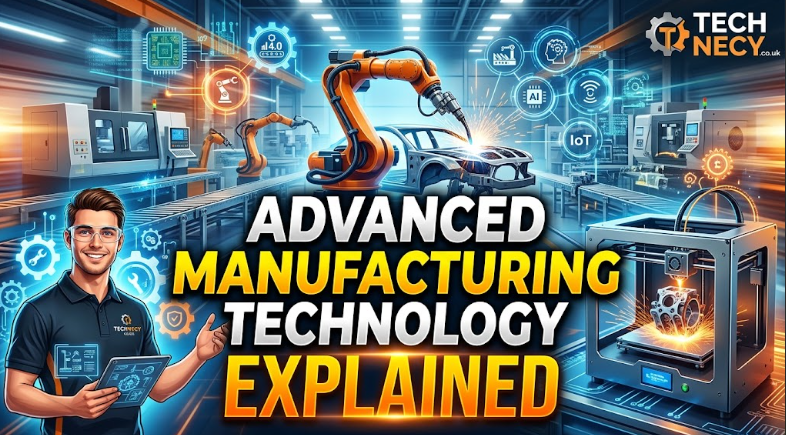
Manufacturing has always changed with new inventions, but the latest shift is different. Factories are becoming more connected, intelligent, and adaptable through advanced manufacturing technology. Instead of relying only on traditional machines and manual processes, companies now use digital tools, automation, artificial intelligence, and advanced production methods to build products with greater accuracy and efficiency. This change is affecting industries of all sizes, from automobile production and aerospace engineering to healthcare and electronics. Advanced manufacturing is not simply about adding more machines to factories. It is about creating smarter systems where technology helps people make better decisions, improve quality, and solve production challenges faster.
What Is Advanced Manufacturing Technology?
Advanced manufacturing technology refers to modern production methods that combine engineering, digital systems, automation, and data-driven tools to improve manufacturing processes. It includes technologies such as robotics, artificial intelligence, 3D printing, industrial sensors, and computer-controlled equipment. Traditional manufacturing often depends on fixed processes that require significant human involvement. Advanced manufacturing introduces more flexible systems that can monitor operations, collect information, and adjust production based on real-time conditions. The main purpose is to create a more efficient manufacturing environment where companies can produce better products while reducing waste, errors, and unnecessary costs.
Why Advanced Manufacturing Is Becoming More Important
Manufacturers today face changing customer demands, global competition, and pressure to produce high-quality products faster. Customers increasingly expect customized products, shorter delivery times, and better performance. Older production methods can struggle with these demands because they may require long setup times and significant manual adjustments. Advanced manufacturing technologies help companies respond more quickly by making production lines easier to modify and manage. Another reason for its growth is the need for better resource management. Businesses are looking for ways to reduce material waste, improve energy efficiency, and create more sustainable production systems.
Key Technologies Behind Modern Manufacturing
Artificial Intelligence and Data Analytics
Artificial intelligence is helping manufacturers understand their operations in greater detail. AI systems can examine production data, identify patterns, and help companies detect problems before they become major issues. For example, factories can use AI-powered inspection systems to identify product defects during production. This reduces the chances of faulty products reaching customers and improves overall quality control.
Data analytics also helps managers make informed decisions by showing how machines perform, where delays occur, and which processes need improvement.
Robotics and Automation Systems
Robotics has become one of the most visible parts of modern manufacturing. Automated machines are used for tasks that require speed, accuracy, or repeated movement. Modern robots can perform activities such as assembling components, moving materials, welding, and inspecting products. Many newer systems are designed to work alongside humans, allowing workers to focus on tasks that require problem-solving and creativity. Automation also improves workplace safety by handling dangerous tasks that may expose workers to harmful conditions.
Additive Manufacturing and 3D Printing
3D printing has changed how some products and components are designed and produced. Instead of creating parts by cutting away material, additive manufacturing builds objects layer by layer from digital designs. This approach allows engineers to create complex shapes that may be difficult to produce using traditional methods. It is especially useful for prototypes, customized products, and specialized components. Industries such as aerospace, medical technology, and automotive manufacturing use 3D printing to test ideas quickly and develop new solutions.
Smart Factories and Connected Systems
Smart factories use connected equipment, sensors, and software to create better communication between machines and production teams. These systems collect information about manufacturing activities and provide insights that help improve performance. A connected factory can track machine conditions, monitor production speed, and identify areas where improvements are needed. This reduces unexpected problems and allows companies to maintain smoother operations. The success of smart factories depends on reliable data systems and proper planning. Technology works best when it supports clear business goals rather than being added without purpose.
Benefits of Advanced Manufacturing Technology
One of the biggest advantages of advanced manufacturing is improved efficiency. Automated systems can complete tasks faster and more consistently, helping companies increase production without sacrificing quality. Quality improvement is another major benefit. Digital monitoring tools and advanced inspection systems help manufacturers identify mistakes earlier and maintain higher standards. These technologies also support customization. Companies can adjust designs and production methods more easily, allowing them to create products that meet specific customer needs. Environmental benefits are also becoming increasingly important. Better control over materials and energy use can help manufacturers reduce waste and operate more responsibly.
Challenges of Implementing Advanced Manufacturing
Although advanced manufacturing offers many benefits, adopting these systems requires careful planning. The cost of new equipment, software, and employee training can be a major challenge, especially for smaller manufacturers. Many companies also face difficulties connecting modern technology with older factory systems. Updating equipment and creating reliable digital networks requires time and technical expertise. Workforce skills are another important factor. Employees need training in areas such as automation, software tools, and data management. The future of manufacturing will depend on workers who can combine technical knowledge with practical manufacturing experience.
The Future of Advanced Manufacturing Technology
The future of manufacturing will likely involve greater cooperation between humans and intelligent systems. Artificial intelligence, robotics, and connected technologies will continue improving how products are designed and produced. Factories are expected to become more flexible, allowing companies to adjust quickly to market changes. Digital models, automated production systems, and real-time monitoring will help businesses create better products with fewer resources. However, technology alone will not determine success. Companies that understand their goals, invest in their workforce, and choose the right solutions will gain the most value from advanced manufacturing.
Conclusion
Advanced manufacturing technology is reshaping how products are created and how factories operate. By combining human expertise with digital tools and automation, manufacturers can improve quality, efficiency, and flexibility. The transition requires investment, planning, and skilled workers, but the long-term advantages can be significant. Companies that adopt these technologies thoughtfully will be better prepared for changing customer needs and future production challenges. Modern manufacturing is no longer only about making products faster. It is about building smarter systems that help businesses create better results with greater control and precision.
Advanced manufacturing technology is reshaping how products are created and how factories operate. By combining human expertise with digital tools and automation, manufacturers can improve quality, efficiency, and flexibility. The transition requires investment, planning, and skilled workers, but the long-term advantages can be significant. Companies that adopt these technologies thoughtfully will be better prepared for changing customer needs and future production challenges. Modern manufacturing is no longer only about making products faster. It is about building smarter systems that help businesses create better results with greater control and precision.
Advanced manufacturing technology is reshaping how products are created and how factories operate. By combining human expertise with digital tools and automation, manufacturers can improve quality, efficiency, and flexibility. The transition requires investment, planning, and skilled workers, but the long-term advantages can be significant. Companies that adopt these technologies thoughtfully will be better prepared for changing customer needs and future production challenges. Modern manufacturing is no longer only about making products faster. It is about building smarter systems that help businesses create better results with greater control and precision.