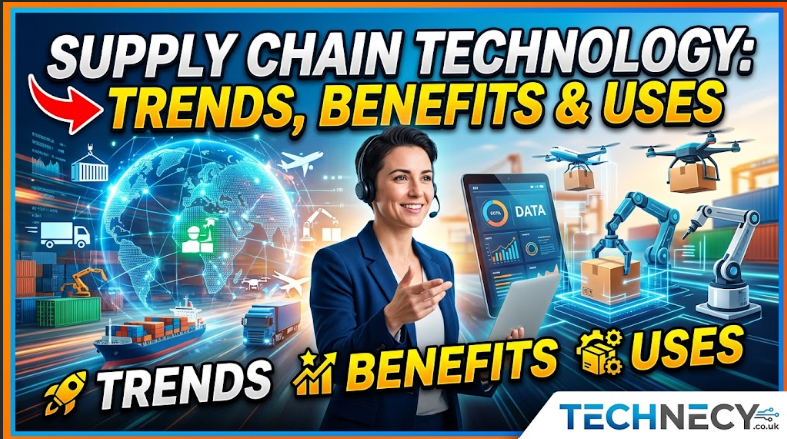
Supply chain technology is reshaping how companies move products from suppliers to customers. Businesses now rely on digital systems to track shipments, manage inventory, predict demand, and improve daily operations. These tools help organizations handle complex supply networks with greater speed and accuracy. A modern supply chain involves many connected activities, including purchasing materials, manufacturing products, storing inventory, and delivering orders. Without accurate information, companies can face delays, excess inventory, and higher costs. Technology provides the visibility and control needed to keep these processes running efficiently. From artificial intelligence and automation to cloud platforms and connected devices, supply chain technology is becoming a key part of business strategy. Companies are not only using these solutions to reduce expenses but also to build flexible operations that can adapt to unexpected changes.
What Is Supply Chain Technology?
Supply chain technology refers to software, hardware, and digital systems that help businesses manage the movement of goods, data, and resources. These solutions support different stages of the supply chain, from supplier coordination to final delivery. Traditional supply chain management often depended on manual records and delayed communication. Modern systems replace these methods with real-time data sharing and automated processes.
Common examples of supply chain technology include:
- Inventory management software
- Warehouse management systems
- Transportation management platforms
- Artificial intelligence tools
- Robotics and automation equipment
- Internet of Things devices
- Cloud-based supply chain solutions
Each technology serves a different purpose, but together they create a connected system that improves planning and execution.
Why Supply Chain Technology Matters
Supply chains have become more complicated because companies operate across different regions, suppliers, and transportation networks. A small disruption can affect production schedules, product availability, and customer satisfaction. Technology helps businesses identify problems earlier and make faster decisions. Companies can monitor inventory levels, track shipments, and analyze market demand without waiting for manual reports. Better visibility also improves communication between suppliers, manufacturers, and retailers. When everyone works with accurate information, businesses can avoid misunderstandings and respond quickly to changes.
How Supply Chain Technology Works
Supply chain technology works by collecting data from different sources and turning it into useful information. Sensors, software platforms, and business systems gather operational details throughout the supply network. For example, a company can track inventory movement from a warehouse to a customer delivery point. The system records updates automatically and provides managers with current information. Advanced technologies then analyze this data to identify patterns. Businesses can use these insights to improve purchasing decisions, forecast demand, and optimize transportation plans.
Artificial Intelligence in Supply Chain Management
Artificial intelligence is changing how companies plan and manage supply chain activities. AI systems can analyze large amounts of data and identify trends that may be difficult for humans to detect manually. One major use of AI is demand forecasting. Businesses can study previous sales patterns, customer behavior, and market conditions to estimate future product demand. AI also helps with inventory planning. Companies can determine when to reorder products, how much stock to maintain, and where inventory should be stored. Another growing application is risk management. AI tools can analyze supplier performance and operational data to identify possible problems before they become major disruptions.
The Role of Automation and Robotics
Automation has become increasingly common in warehouses and distribution centers. Companies use machines and robotic systems to complete repetitive tasks faster and with fewer errors.
Automated systems can help with:
- Sorting products
- Moving inventory
- Packing orders
- Managing storage areas
Robotics allows warehouses to process more orders while maintaining accuracy. However, automation usually works alongside employees rather than completely replacing human workers. Workers can focus on tasks that require decision-making, problem-solving, and quality control while machines handle repetitive activities.
Internet of Things and Real-Time Tracking
The Internet of Things connects physical equipment and products through sensors and communication networks. These devices collect information about location, condition, and performance. In logistics, IoT technology allows companies to monitor shipments throughout transportation. Businesses can see where products are located and whether they are stored under suitable conditions. For industries such as healthcare and food, monitoring temperature and handling conditions is especially important. Real-time tracking helps protect product quality and reduce losses.
Cloud-Based Supply Chain Solutions
Cloud technology allows companies to manage supply chain operations through online platforms. Instead of storing information in separate systems, businesses can create a shared environment for data and collaboration.
Cloud-based solutions provide several advantages:
- Easier access to information
- Faster communication between partners
- Lower infrastructure requirements
- Simpler system updates
These platforms are useful for companies that work with multiple suppliers, warehouses, and transportation providers.
Digital Twins and Predictive Planning
Digital twin technology creates a virtual model of a real supply chain. Businesses can use these models to test different scenarios before making operational changes. For example, a company can simulate the impact of changing suppliers, opening a new warehouse, or modifying delivery routes. This approach helps organizations understand possible outcomes and make decisions based on data rather than assumptions.
Benefits of Supply Chain Technology
Supply chain technology provides several practical benefits for businesses.
Improved Efficiency
Automated processes reduce manual work and allow companies to complete tasks faster. Better coordination between departments also reduces unnecessary delays.
Better Inventory Control
Accurate inventory information helps businesses maintain the right amount of stock. This reduces shortages while preventing excessive storage costs.
Faster Decision Making
Real-time information allows managers to respond quickly to changing conditions. Businesses can adjust plans based on current data instead of outdated reports.
Improved Customer Experience
Customers expect accurate delivery updates and reliable service. Technology helps companies provide faster shipping and better order visibility.
Challenges of Supply Chain Technology Adoption
Although technology provides many advantages, implementing new systems requires careful planning. One challenge is cost. Advanced platforms, equipment, and employee training require investment. Small businesses may need to adopt solutions gradually based on their needs and budget. Another issue is system integration. Many companies still use older software that may not easily connect with newer technology. Data security is also a major concern. Connected systems create more opportunities for cyber threats, making protection and access control essential.
Future of Supply Chain Technology
The future of supply chain technology will focus on smarter automation, stronger data connections, and faster decision-making. Artificial intelligence will continue improving forecasting and planning. Robotics will become more capable in warehouses and manufacturing environments. Companies will also invest more in technologies that improve sustainability and reduce waste. Future supply chains will rely less on reacting to problems and more on predicting them. Businesses that successfully combine technology with skilled employees will be better prepared for changing market conditions.
Conclusion
Supply chain technology has changed the way businesses manage products, information, and operations. Digital tools provide better visibility, faster decisions, and improved control across complex networks. Companies do not need to adopt every available technology at once. The most effective approach is choosing solutions that address specific operational problems and deliver measurable improvements. As supply chains continue to evolve, technology will remain a major factor in creating efficient, flexible, and reliable business operations.