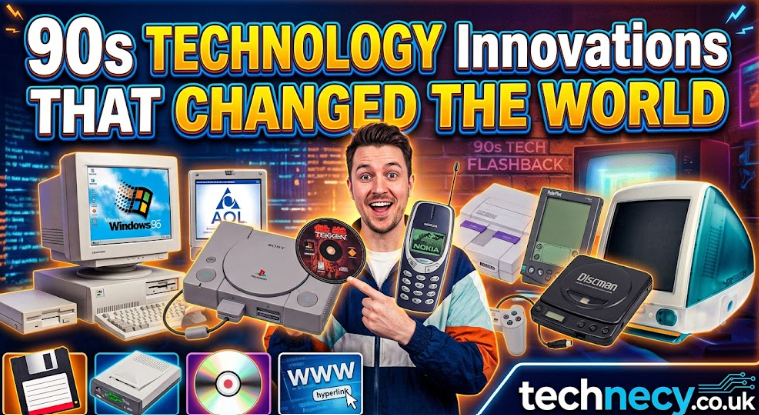
The 1990s was a defining decade for technology. It was the period when computers moved from offices into homes, the internet became accessible to ordinary people, mobile phones started becoming practical, and digital entertainment began replacing traditional formats. Many technologies that shape everyday life today were influenced by developments from the 1990s. Online communication, web browsing, digital photography, portable devices, and modern gaming all experienced major changes during this decade. While 90s technology may appear simple compared with today’s devices, it created the foundation for the connected world that followed.
The Internet Became Part of Everyday Life
Before the 1990s, the internet was mainly used by researchers, universities, and government organizations. During this decade, it began changing into a public communication platform that allowed people to access information, communicate, and share content from their homes. The introduction of the World Wide Web made the internet easier to understand and use. Instead of relying on complex commands, users could open websites through browsers and explore information through clickable pages. This change helped the internet move from a specialist tool to a service used by millions of people. Web browsers such as Mosaic and Netscape Navigator played an important role in increasing internet adoption. Email services, online communities, and early search engines also became popular, creating new ways for people to communicate and find information.
Home Computers Became More Common
The 1990s was the decade when personal computers became normal household devices. Earlier computers were expensive and mostly found in businesses, but improvements in hardware and software made them more affordable for families, students, and small businesses. Microsoft Windows 95 became one of the most influential computer releases of the decade. Its simple interface, Start menu, and improved usability helped introduce many new users to personal computing. Home computers were used for more than office work. People started using them for education, games, digital art, music, and internet access. CD-ROM drives also changed how software was distributed, allowing programs and games to store much larger amounts of data than older floppy disks.
Mobile Phones Started Becoming Personal Devices
Mobile phones existed before the 1990s, but they were usually large, expensive, and mainly used by professionals. During the decade, improvements in mobile networks and manufacturing helped phones become smaller, cheaper, and more accessible. The introduction of digital mobile networks improved call quality and reliability. Text messaging also became popular, creating a new form of communication that would later become a normal part of daily life. Some devices from the late 1990s also introduced features that looked similar to modern smartphones. The Nokia 9000 Communicator combined phone functions with email, calendars, and basic internet features. Although it was not designed for everyday consumers, it showed where mobile technology was heading.
Gaming Entered the 3D Era
The 1990s changed video games forever. Advances in computer graphics allowed developers to move beyond simple two-dimensional designs and create more realistic environments. The launch of the Sony PlayStation in 1994 helped popularize CD-based gaming, while the Nintendo 64 introduced many players to advanced 3D experiences. Games became larger, more detailed, and more cinematic. Titles such as Super Mario 64, Tomb Raider, Doom, and Final Fantasy VII demonstrated how technology could create new types of interactive experiences. The decade helped establish gaming as a major form of entertainment for people of all ages.
Digital Media Began Replacing Older Formats
Entertainment technology went through a major shift during the 1990s. CDs became the preferred format for music, replacing many cassette tapes because they offered better sound quality and easier access to tracks. The decade also introduced early digital music technology. MP3 files allowed people to store music digitally, leading toward the portable music revolution that would grow in the following years. DVD technology also appeared near the end of the decade. Although VHS remained popular for years, DVDs offered better picture quality, more storage, and additional features that changed home entertainment.
The Beginning of Digital Photography
Photography started moving away from traditional film during the 1990s. Early digital cameras were expensive and produced lower-quality images compared with film cameras, but they introduced a completely new approach to photography. Digital cameras allowed users to store images electronically instead of developing physical film. People could transfer photos to computers, edit them, and share them more easily. This technology became the foundation for the digital cameras and smartphone photography that later transformed how people capture everyday moments.
Portable Technology Before Smartphones
Before smartphones became common, people used devices called Personal Digital Assistants (PDAs). These small electronic organizers helped users manage schedules, contacts, notes, and tasks. Products like the PalmPilot showed that people wanted portable technology that could help organize their personal and professional lives. Although PDAs eventually disappeared as separate devices, many of their features became standard in modern smartphones.
The Y2K Problem Created Global Technology Concerns
As the 1990s came to an end, one technology issue received worldwide attention: the Year 2000 problem, also known as Y2K. Many older computer systems stored years using only two digits. Some experts worried that computers might misunderstand the year 2000 and cause failures in important systems such as banking, transportation, and government services. Companies and organizations spent years reviewing and updating computer systems before the new millennium. The widespread preparation helped prevent the large-scale problems many people feared.
How 90s Technology Influenced Modern Life
The technology of the 1990s created many ideas that continue today. The internet became a public service, computers became personal tools, mobile communication expanded, and digital entertainment started replacing physical formats. Modern smartphones, online businesses, streaming platforms, and digital services all developed from earlier ideas that gained popularity during this decade. The importance of 90s technology is not only about old devices. It represents the moment when technology became deeply connected with everyday life and started shaping how people communicate, work, and entertain themselves.
Conclusion
The 1990s was a decade of rapid technological change. It was not defined by one single invention but by many developments that worked together to create a more connected world. Computers became personal, the internet became accessible, mobile communication expanded, and digital entertainment started becoming mainstream. Looking back at 90s technology shows how today’s digital world was built step by step. The devices may seem outdated now, but the ideas behind them continue to influence the technology people use every day.